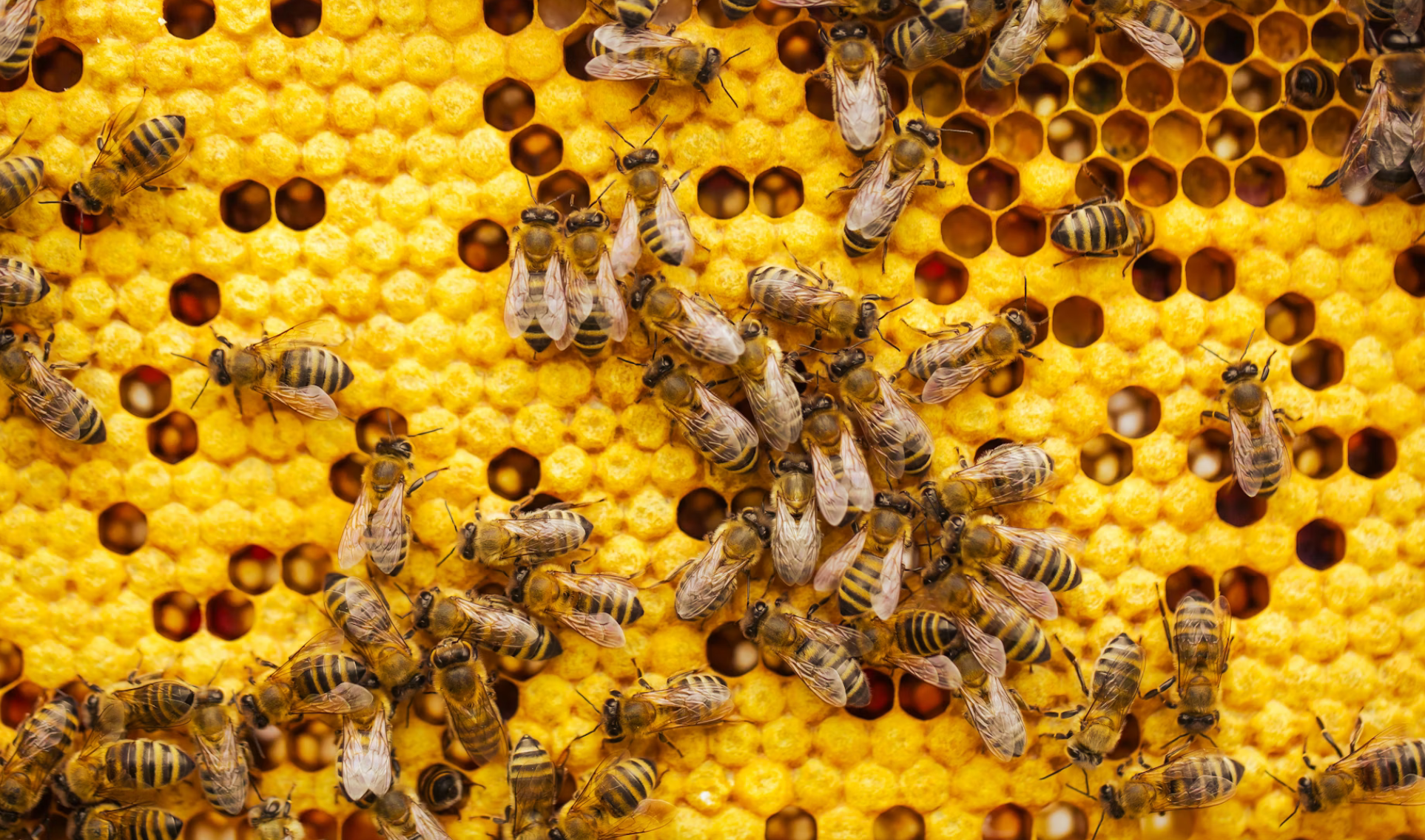
Honey is often considered a natural, harmless sweetener, but it remains the subject of extensive ethical debates and ancient religious laws. Honey is typically considered acceptable for vegetarians; however, is rejected by vegans on ethical and environmental grounds. Meanwhile, Jewish tradition holds a unique, historically significant view of honey that seems to contradict its standard dietary laws.
Veganism opposes all forms of animal exploitation. Given that bees are sentient beings, (capable of subjective emotions and pain), taking their honey for human consumption is viewed as exploitation and theft of their natural labour. Bees do not make honey for humans, rather it is their primary source of food and energy and is meticulously stored to sustain the hive through the winter. Cruel practices are commonplace in commercial productions; for example, the queen bee's wings are often clipped to prevent the hive from swarming and leaving. Moreover, some large-scale keepers kill off entire hives before winter to reduce costs, restarting honey production with new bees in the spring. When honey is harvested for humans, it is often replaced with cheap sugar water or high-fructose corn syrup for the bees to eat, which lacks the essential nutrients and antimicrobials needed to fight off diseases. Furthermore, commercial migratory beekeeping can have adverse environmental impacts as they stress bee populations and introduce diseases to native, wild pollinators.
In kashrut, a fundamental rule states that "that which comes from a non-kosher animal is non-kosher”. Since bees are non-kosher insects, their honey should logically be forbidden, nonetheless it is strictly kosher. The Talmud justifies this exception because bees do not actually produce honey from their own bodies. Instead, bees swallow nectar and regurgitate it, meaning the nectar is never digested or transformed by the bee's internal organs. This process renders it a gathered substance rather than an animal byproduct. Meanwhile other bee products, like royal jelly, are a subject of debate because they are secretions from the bee's body, making many Orthodox authorities consider them to not be kosher.
The "Land of Milk and Honey" does not refer to honey, instead historians and rabbis agree it primarily referred to date honey (silan) or fruit nectar. In the ancient context, when bee honey is mentioned (such as Samson eating honey from a lion's carcass) it refers to wild honey, a highly prized luxury rather than a mass-produced product. The ancient perspective considered honey a miraculous gift from nature, which was gathered with minimal ecological disruption. The modern production of honey is considerable different to biblical times, as discussed above. Welfare and environmental considerations have led to a growing movement of Jews choosing a vegan lifestyle, arguing that modern factory bee farming violates the Torah principle of Tza'ar Ba'alei Chaim.