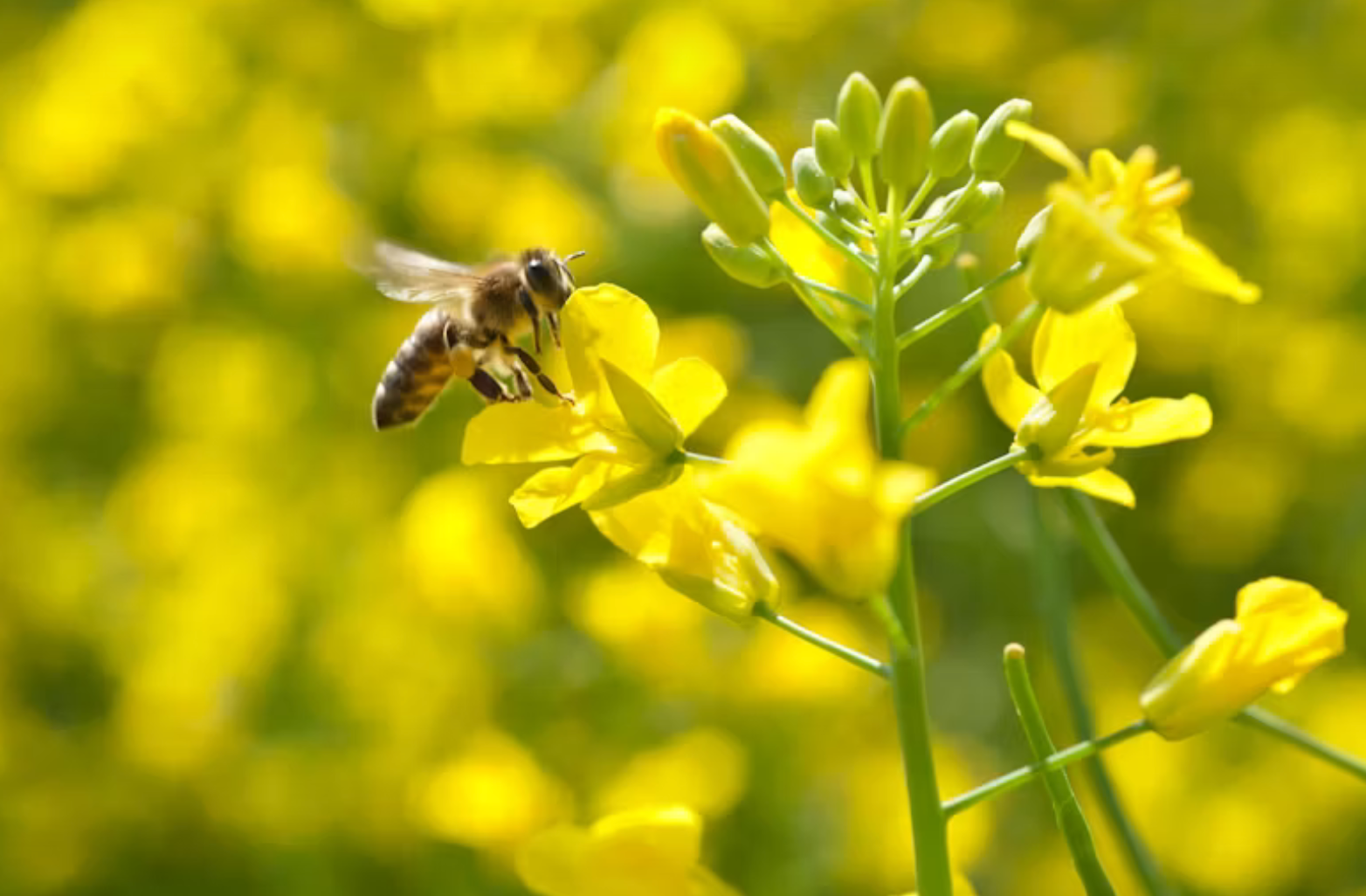
Summer time is the peak forage for the pollinators of Britain, however many wild bees face significant growing pressures from heatwaves and considerable losses to their habitats. Bumblebees thrive in temperate climates such as the springs and summers many of us remeber before extreme heat waves became the norm owing to climate change. In hot conditions, bumblebees struggle as precious nectar supplies dry up quickly. As a result, bumblebees often end up exhausted from foraging unsuccessfully in the heat. Fortunately, urban gardens, window boxes, patios, offer vital sanctuaries to these little creatures.
As summer heatwaves become the norm, how can be support bees to survive, pollenate and thrive?
1. Create a "Bee Bar": Ever heard of a Bee Bar? Simply fill a shallow tray or dish from your kitchen with rainwater smooth pebbles. Bumblebees require water for cooling their nests, but the deep waters of typical bird baths pose a drowning hazard. Therefore, the smooth pebbles give them safe perches upon which they can rest and stay safe.
2. Nectar-Rich Gardens If you have access to a garden, green space or window sill, consider growing blue and purple single-flowered plants such as catmint, lavender and verbena bonariensis. Although they can be visually appealing, avoid dense flowers which have double-petal varieties as these can prevent bees from accessing pollen.
3. Consider a ‘Wild Corner’ If your garden or green space has a lawn, consider leaving a small patch of grass uncut. This allows for clover, dandelions and daisies to bloom and bees to perch. Moreover, avoid the use of synthetic pesticides which could endanger bees and other pollenates who rely on these spaces.
Lastly, if you find an overheated bee resting on hot pavement, gently nudge them into the shade out of harm’s way and offer a few drops of water on a spoon. Every mitzvah towards a pollenator helps rebuild the UK's natural environment.